
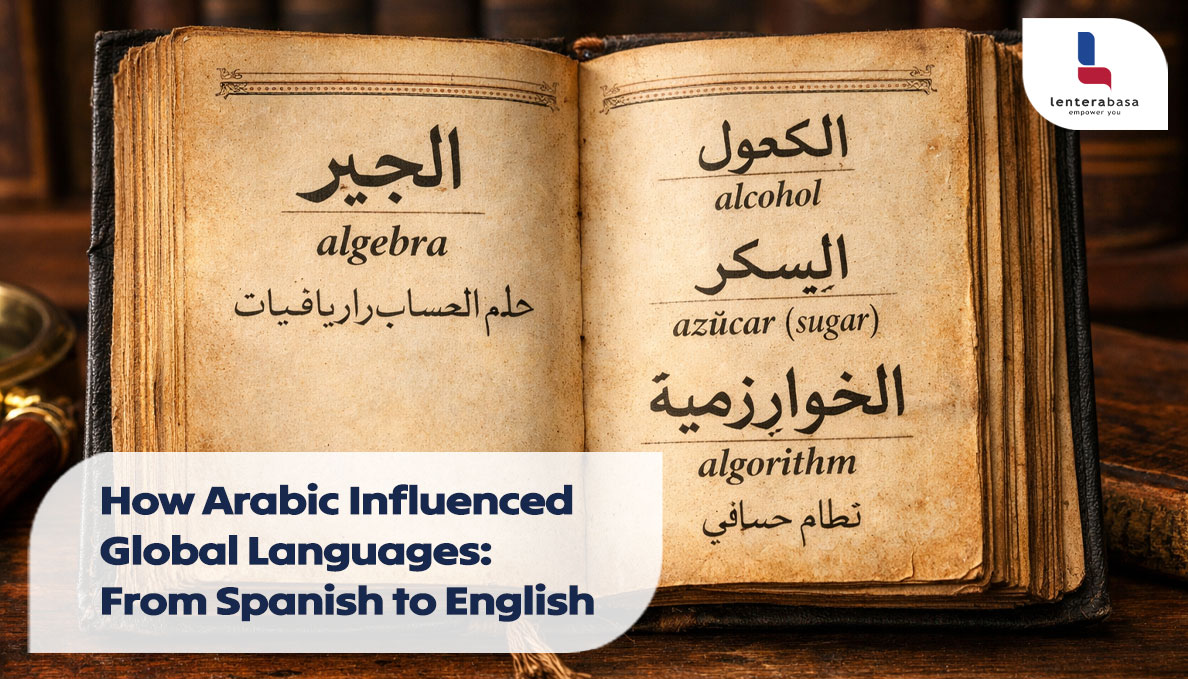
The Arabic language is a masterpiece of cultural and historical impact, leaving its mark on speech patterns across the globe. Far from being confined to its origins, Arabic has integrated a wealth of loanwords into the very heart of international languages. Today, in 2026, decoding these linguistic roots serves as a Linguistic Weapon, empowering anyone eager to find their voice on the world stage.
Exploring the lineage of Arabic terms is a tribute to human resilience and our collective knowledge. For both the literature enthusiast and the tech professional, these words encapsulate a gripping chronicle of ancient trade and scientific breakthrough. By identifying these links, you do more than just study words; you cultivate a Victory Log of cultural intelligence that sharpens your professional focus.
Arabic Influence on Global Vocabulary: Words Shared Across Languages
The influence of Arabic on global languages grew significantly during the Islamic Golden Age. During this period, Arabic functioned as a major language of science, mathematics, philosophy, and trade. Scholars translated and developed knowledge that later spread to Europe and other regions. As a result, many modern terms used today originate from Arabic.
Arabic Contributions to the Language of Science
A number of important scientific and technical terms come from Arabic. Words such as algebra (from al-jabr), algorithm (derived from the name of the mathematician Al-Khwarizmi), and chemistry (from al-kīmiyāʾ) demonstrate the strong influence of Arab scholars on the development of global scientific vocabulary. These terms continue to be widely used in education, research, and technology.
Trade and Everyday Commodities
International trade also played a major role in spreading Arabic vocabulary. As goods moved across continents, their names often traveled with them. Examples include coffee (qahwa), sugar (sukkar), cotton (quṭn), and candy (qandi). Over time, these words were adopted into English and many European languages, becoming part of everyday communication.
Maritime and Administrative Terminology
Arabic also influenced terminology related to navigation, administration, and professional life. Words like admiral (from amīr al-baḥr, meaning “commander of the sea”) and arsenal (from dār aṣ-ṣināʿa, meaning “house of manufacture”) show how Arabic terms became integrated into European languages and institutions.
Understanding these linguistic connections helps readers recognize how knowledge and culture have historically moved between civilizations.
The Legacy of Al-Andalus: Spanish Words with Arabic Origins
One of the clearest examples of Arabic influence in Europe can be found in the Spanish language. For nearly eight centuries, parts of the Iberian Peninsula were under Muslim rule in a period known as Al-Andalus. During this time, Arabic and Romance languages interacted closely, leaving a lasting impact on Spanish vocabulary.
Today, thousands of Spanish words have Arabic roots. Below are several examples grouped by theme.
Home, Daily Life, and Architecture
- Almohada (pillow – al-mukhadda)
- Alfombra (carpet – al-ḥunbra)
- Albañil (builder or mason – al-bannāʾ)
- Azotea (flat roof – as-suṭayḥa)
- Alquiler (rent – al-kirāʾ)
- Aduana (customs office – ad-dīwān)
- Almacén (warehouse – al-makhzan)
- Alcoba (bedroom or alcove – al-qubba)
- Aldea (village – al-ḍayʿa)
- Barrio (neighborhood – barrī)
Food, Agriculture, and Nature
- Aceite (oil – az-zayt)
- Aceituna (olive – az-zaytūna)
- Arroz (rice – ar-ruzz)
- Azúcar (sugar – as-sukkar)
- Naranja (orange – nāranj)
- Limón (lemon – laymūn)
- Azafrán (saffron – az-zaʿfarān)
- Espinaca (spinach – isbinākh)
- Zanahoria (carrot – safunnāriya)
- Berenjena (eggplant – bādinjāna)
Everyday Expressions and Cultural Terms
- Ojalá (hopefully or “God willing” – law shāʾ Allah)
- Hasta (until – ḥattā)
- Tarea (task – ṭarīḥa)
- Ajedrez (chess – ash-shaṭranj)
- Guitarra (guitar – qītāra)
- Azul (blue – lazaward)
- Rincón (corner – rukn)
- Taza (cup – ṭāsa)
- Jarabe (syrup – sharāb)
- Almanaque (almanac – al-manākh)
Science, Mathematics, and Governance
- Cero (zero – ṣifr)
- Cifra (digit or figure – ṣifr)
- Álgebra (algebra – al-jabr)
- Alcohol (alcohol – al-kuḥl)
- Alquimia (alchemy – al-kīmiyāʾ)
- Alcalde (mayor – al-qāḍī)
- Almirante (admiral – al-amīr)
- Rehén (hostage – rahn)
- Hazaña (feat or achievement – ḥasana)
- Alhaja (jewel – al-ḥājah)
These examples show how deeply Arabic vocabulary is embedded in modern Spanish.
Why Linguistic History Still Matters Today
Learning the historical origins of words can deepen our understanding of language and culture. Many commonly used terms in English and Spanish reflect centuries of interaction between different civilizations. Recognizing these connections helps learners appreciate how languages evolve through trade, scholarship, and cultural exchange.
For students, travelers, and language enthusiasts, exploring word origins can make vocabulary easier to remember while also providing valuable cultural insight.
The presence of Arabic words in Spanish and English highlights the long history of cultural exchange between the Middle East and Europe. From science and mathematics to food and everyday expressions, Arabic has contributed significantly to the vocabulary used around the world today.
Understanding these linguistic influences not only enriches language learning but also reminds us that modern languages are shaped by centuries of global interaction. Want to unlock deep insights into other fascinating cultures? Discover more global destination guides only at lenterabasa.com!