
While much of the world focuses on the universal symbols of Christmas. Santa Claus and snow. France observes December with a collection of traditions that are distinctly regional, historical, and deeply integrated into its culture. Unlike the commercial frenzy seen elsewhere, the French celebration is often marked by an emphasis on gastronomy, family, and localized folklore.
December in France begins not with Christmas carols, but with key regional feast days and a quiet, culinary preparation that builds towards Le Réveillon (the long Christmas Eve dinner). From the Northern traditions rooted in Germanic customs to the unique artistic celebrations in the South, French December offers a rich tapestry of cultural customs.
Let’s explore three key areas where French December traditions truly set themselves apart.
Northern Roots: Saint Nicholas and the Advent Calendar
The northern and eastern regions of France, particularly Alsace and Lorraine, share cultural bonds with Germany and Belgium, resulting in traditions that predate modern global Christmas customs.
Fête de la Saint-Nicolas (December 6th)
For children in the North and East, the Fête de la Saint-Nicolas is more anticipated than Christmas Day itself. Saint Nicholas is seen as the original Santa Claus, a generous bishop who rewards good children.
- The Tradition: On the evening of December 5th, children leave their shoes by the fireplace or door. Saint Nicholas passes by, leaving treats like gingerbread, oranges, and sometimes small toys for well-behaved children.
- The Contrast: He is accompanied by Père Fouettard (Father Whipper), a sinister figure who delivers bundles of switches or lumps of coal to naughty children. This stark, moral dichotomy adds drama and seriousness to the tradition.
The Advent Calendar (Le Calendrier de l’Avent)
The familiar Advent Calendar, counting down the 24 days until Christmas, also has strong German roots that took hold firmly in eastern France. It serves as a structured, daily marker for the Advent season, moving the focus from immediate gifts to gradual anticipation. This ritual reflects the French appreciation for measured preparation before a large event.
The Culinary Centerpiece: La Bûche de Noël and Le Réveillon
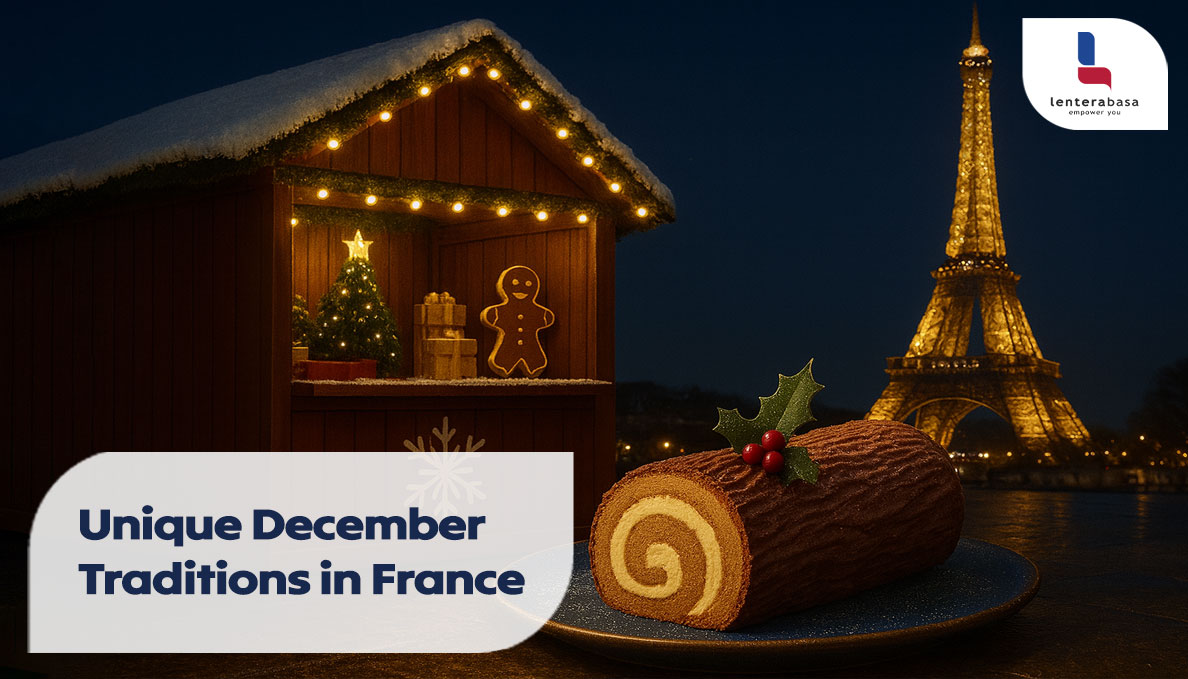
In France, Christmas Eve dinner, Le Réveillon, is arguably the main event. It is a long, lavish, and multi-course meal (often lasting several hours) served after the midnight Mass. The most iconic symbol of this feast is the Bûche de Noël.
The History of the Yule Log
The Bûche de Noël is not merely a dessert; it is a culinary representation of the old European tradition of burning a Yule log in the fireplace to bring good luck in the New Year.
- The Transformation: In the 19th century, as fireplaces became smaller and less common, the tradition transitioned into the dessert we know today: a sponge cake rolled and iced to resemble a small log, usually flavored with chocolate, coffee, or chestnuts.
- The Gastronomy: Le Réveillon itself is a reflection of French culinary identity. The meal often begins with prestigious dishes like foie gras, oysters, or smoked salmon, followed by a main course (often capon or turkey stuffed with chestnuts), culminating with the Bûche. The quality and preparation of the food are central to the celebration’s spirit.
Southern Artistic Devotion: Les Santons de Provence
In the region of Provence, the December tradition takes an artistic and highly detailed form centered around the nativity scene.
The Santons (Little Saints)
Instead of simply setting up a standard manger scene, Provençal families collect and arrange Les Santons (literally “little saints”). These are small, handcrafted terracotta figurines painted in vivid detail.
- Unique Representation: Unlike traditional nativity scenes, Provençal Santons include not just the holy family and shepherds, but also figures representing everyday village life: the baker, the fisherman, the washerwoman, the mayor, and the tambourine player.
- The Message: This tradition integrates the sacred birth story into the fabric of local, everyday life. It creates a vibrant, miniature world that reflects the entire Provençal community gathering to witness the event, embodying local heritage and artistry. The Santons are often displayed in a specially constructed landscape called a crèche (nativity scene), which grows larger and more elaborate each year.
French December traditions illustrate the country’s profound connection to history and regional identity. Whether it is the moral lesson delivered by Saint Nicholas, the communal pride in the Bûche de Noël, or the artistic dedication of the Santons, these customs offer a slower, more deliberate, and gastronomically rich approach to the holiday season. They serve as a vibrant reminder that cultural roots are alive and well in modern France.
Planning your cultural immersion trip? Check out other unique information on the website Lenterabasa.com!